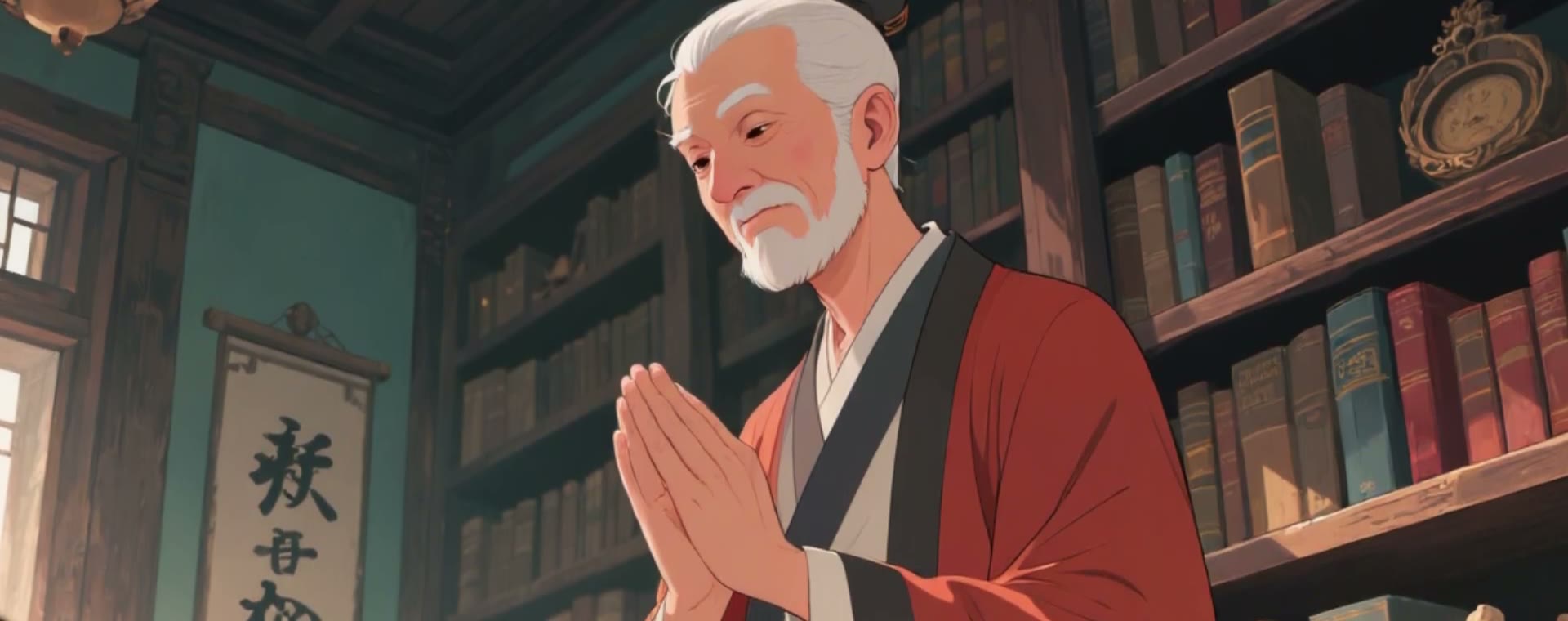
A distillation of a classic Chinese wisdom talk (国学) on the most critical decade of life — ages sixty to seventy.
The Paradox
Here’s a strange phenomenon: some people retire and exercise daily, follow every health regimen religiously — and within a few years, their health collapses. Meanwhile, others barely “bother” with any of it, eat when hungry, sleep when tired, and live comfortably into their nineties.
The difference isn’t how much you exercise, or whether you take supplements. It’s whether you observe certain red lines — lines that shouldn’t be crossed. Each of the seven below was learned, as the saying goes, through the hard-earned lessons of countless elders.
Lesson from the Medicine King
Sun Simiao (孙思邈), the most famous physician of the Tang dynasty who lived past one hundred, was asked for his secret to longevity. His answer was twelve characters:
口中言少,心中事少,腹里食少,自然睡少 Speak less. Worry less. Eat less. (Sleep naturally, without excess.)
Simple four lines — yet few can actually do them. He also said: health preservation means moderate activity, but never exhaustion. The ancients understood long ago: after sixty, the point is not to train harder, but to grasp the right measure.
The Seven Red Lines
1. Don’t fall. As the Yellow Emperor’s Classic says, the legs age first — balance declines, and a broken bone at this age sets off a cascade: blocked circulation, declining organs. Those who stay mobile into their eighties didn’t get there by intense training; they got there by being steadfast for decades: walking unhurried, sitting and rising without panic, holding the handrail on stairs. Stability matters more than speed. Safety matters more than exercise.
2. Don’t overexert. Zhuangzi tells of a man born crooked and incapable of heavy work — who nonetheless lived long, precisely because he never strained. What you could carry at one hundred jin in your youth, carry twenty now. What used to mean late nights at the office now means bed by nine. Admitting your limits isn’t weakness. It’s wisdom.
3. Don’t stay up late — it beats any supplement. Medicine is inferior to food; food is inferior to sleep. Sleep is the best tonic there is. One late night at this age can take a week to recover from. In bed before eleven, a short noon rest — more effective than any ginseng brew.
4. Don’t let emotions run wild. “A hundred illnesses are born of qi” (气). Anger harms the liver; excessive joy harms the heart; grief harms the lungs; fear harms the kidneys. Confucius, asked what an elder should guard against, answered plainly: greed — for gain, for recognition, for face. When you can’t get it, you get angry; when you’re angry, your body pays. An inch of width in the heart, an inch of health.
5. Don’t eat carelessly — quality over quantity. The Yellow Emperor’s Classic warns: overeat and the intestines are injured. Metabolism slows after sixty; heavy, salty, oily food invites the “three highs.” Stop at seventy percent full, keep it light, cut the processed food.
6. Don’t be isolated. Flowing water doesn’t stagnate; a door hinge used daily doesn’t rot. Staying alive means moving — not just the body, but the mind. Walk out the door, find people to talk to, cultivate interests, sit in the sun. A mind kept company keeps illness at arm’s length.
7. Don’t rush into hospitals and surgeries. The most poignant red line. The highest medicine treats illness before it arises. Many conditions at this age aren’t incurable — but the treatment breaks your original vitality (元气). If medication works, skip the injection; if regulation works, skip the operation. This isn’t refusing treatment — it’s refusing to let your body be tossed about blindly.
The Real Secret
We tend to think of the sixties as the beginning of the downhill slope. The teaching inverts this: ages sixty to seventy are the most critical decade — the foundation of everything after. Hold these lines in this decade, and the road ahead stays steady. Break them, and late life becomes a steep fall.
Confucius framed it as: at sixty, learn to hear others out and drop stubbornness; at seventy, learn to follow your own heart without straining yourself. The goal was never to live merely long — it’s to live with quality and dignity.
Source: a popular Chinese wellness talk circulating on Douyin (烽城国学, ep. 207). Transcribed and translated from the original Mandarin.